




Gas is becoming just as crucial a factor in the war as oil. The damage to QatarEnergy’s infrastructure and the suspension of part of its production have highlighted the vulnerability of the global liquefied natural gas (LNG) market. Qatar accounts for around 20% of global LNG supplies, and there is virtually no spare capacity to quickly make up for these volumes. This is of particular concern for Europe, as after 2022 its energy balance will rely heavily on LNG imports.
The scope for quickly replacing Middle Eastern gas is limited. The US remains the largest alternative supplier, but its export infrastructure is already operating at near-capacity. Even the planned increase in exports of around 15 million tonnes per year would not be enough to offset Qatari volumes, which amount to around 80 million tonnes annually.
Norway is also operating at the limits of its production capacity. This means that in the event of a protracted crisis, the market will face not only rising prices but also the risk of a physical gas shortage.
In this situation, Russia gains an additional lever of pressure over the European market. Russia is already signalling the possibility of halting gas supplies to the EU ahead of the deadlines set by Brussels. Putin has stated outright that rising prices in Europe are linked to competition for more solvent markets. Meanwhile, American LNG will go where the price is higher – that is, to Asia. The Russian leader has stated that an accelerated reorientation of exports towards alternative destinations is being worked on, although for now this looks more like tactical blackmail. However, against the backdrop of possible supply disruptions from the Persian Gulf, this strengthens Russia’s negotiating position in both Europe and Asia.
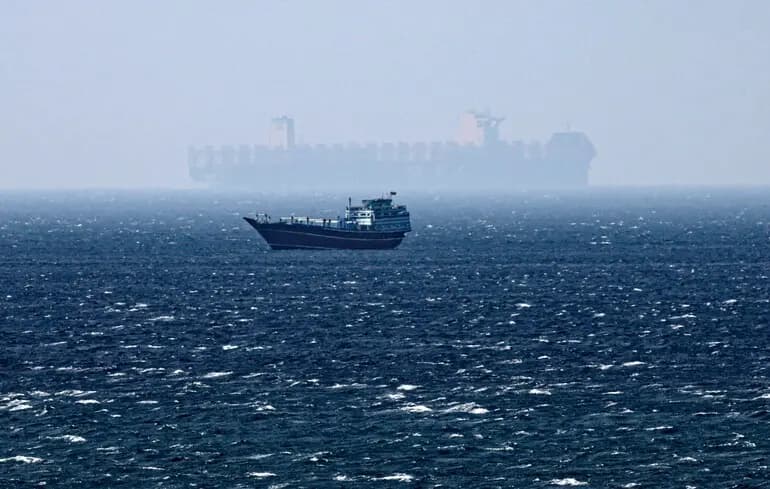
Be that as it may, Russia stands to gain the most from a halt to Qatari gas supplies. And this benefit is not limited to a temporary rise in prices (though we do not know how temporary this rise will be – Iran, it seems, is prepared to block the Strait of Hormuz for a long time). The main benefit for Russia is that it will now be much more difficult to block supplies of Russian LNG. This is because consumers – primarily Asian countries – will realise that even if the Strait of Hormuz is unblocked in the near future, it could be blocked again at any moment, and they must always have a ‘Plan B’ in place for such an eventuality.
At the same time, Europe will realise that due to the ‘Asian premium’ – the ability and willingness of Asian countries to pay a higher price – American gas will go not to Europe, but to Asia. And it is by no means out of the question that Europe will be tempted to return to Russian gas. Initially, this would be temporary. But, as the saying goes, ‘nothing is more permanent than the temporary’.
The key question for the coming weeks is the extent to which regional players will be drawn in. If the conflict remains within its current boundaries and is limited to an exchange of blows between Iran, Israel and their allies, it will enter a phase of protracted confrontation involving economic pressure and periodic strikes on infrastructure.
But if hostilities affect major energy facilities in the Gulf states or a de facto complete and strict blockade of the Strait of Hormuz takes place (formally, it has not been closed, but traffic has been drastically reduced and insurance costs have soared), the conflict will quickly escalate into a global energy crisis with corresponding consequences for the world economy.
Vyacheslav Butko
Economic Adviser to the Kyiv Security Forum


 Ukraine, Kyiv, 01001