




A sociological survey conducted by the Razumkov Centre in collaboration with the Kyiv Security Forum in territories controlled by the Ukrainian government from April 02nd, 2026 to April 08th, 2026.
A total of 1,200 respondents aged 18 and over were interviewed.
Key findings of the study
• More than half of respondents believe that events in Ukraine are heading in the wrong direction, whilst less than a third hold the opposite view. This assessment is slightly more pessimistic than in 2025, but more optimistic than it was prior to February 24th, 2022.
• More than three-quarters of those surveyed do not intend to leave Ukraine after the war.
• Almost 9% of respondents said that their home had been damaged or completely destroyed as a result of the hostilities.
• Compared with the pre-war period, the proportion of citizens who believe that democracy is the most desirable form of government for Ukraine has increased. This proportion now stands at almost two-thirds.
• Respondents rate the level of corruption in Ukraine as high – 8.6 out of 10. This rating has remained unchanged since 2025 and has risen slightly compared with 2023.
• The vast majority of respondents believe that the level of corruption in Ukraine is currently higher than it was before February 24th, 2022. This assessment is significantly more negative than in 2023, but slightly more optimistic than in 2025.
• Ukrainians have a very high level of trust in the institutions directly responsible for the country’s defence, and this high level of trust has remained consistent over recent years.
• A relative majority of respondents trust the President of Ukraine, which is partly due to his role as Supreme Commander-in-Chief. The balance of trust in the President of Ukraine has remained positive since the start of the large-scale Russian aggression and is now lower than in February 2026, but higher than in November 2025.
• Among politicians, those who are directly involved or have been involved in Ukraine’s defence enjoy the most positive trust ratings: Zaluzhnyi, Budanov, Malyuk, Fedorov, Biletsky and Zelenskyy. The most negative trust ratings are held by representatives of the old elites: Yulia Tymoshenko and Yuriy Boyko.
• Ukrainians view favourably those foreign leaders who have consistently supported Ukraine: E. Macron, Ursula von der Leyen, M. Sandu, G. Meloni, F. Merz, K. Kallas, D. Tusk, K. Starmer, M. Rutte, P. Pavel. Attitudes towards R. Erdoğan and the Pope are also positive.
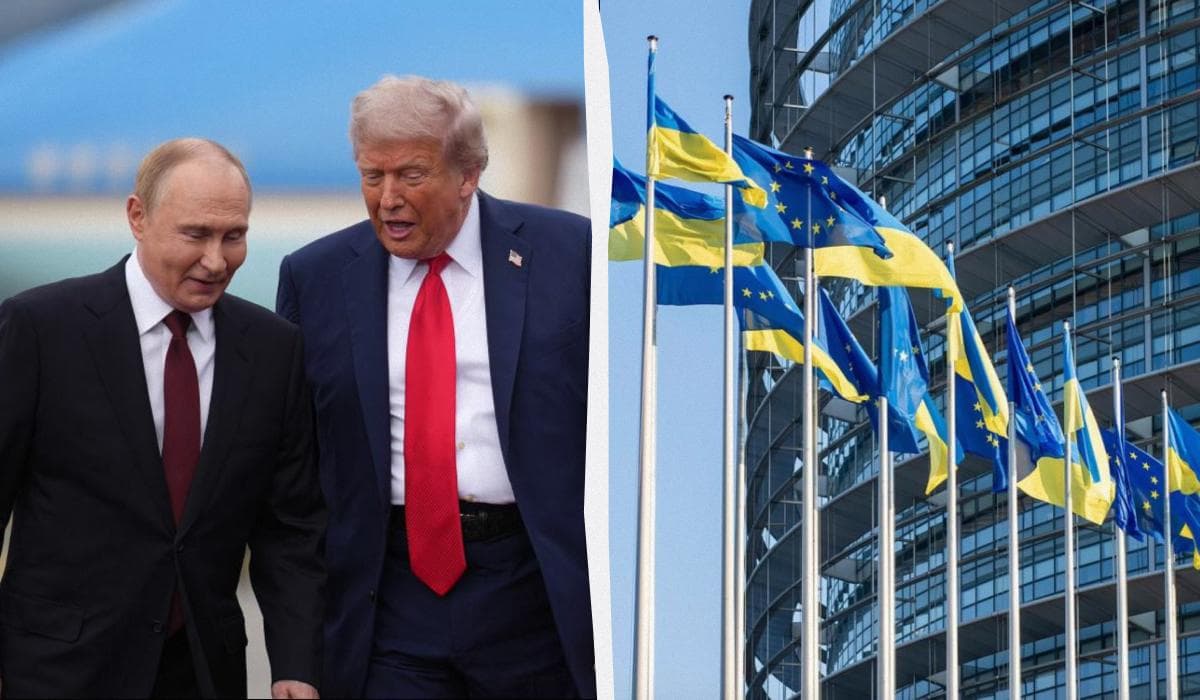
• In recent months, negative sentiment towards Donald Trump has increased significantly. Attitudes towards Alexander Lukashenko and Vladimir Putin remain extremely negative.
• Respondents express a very positive attitude towards European countries, the EU as a whole, as well as Canada, Moldova, Japan and Turkey. Attitudes towards NATO, the US and Israel are deteriorating, although the vast majority of Ukrainians still view them positively.
• Respondents expressed negative views towards Hungary, China, Iran, Belarus and, in particular, Russia, towards which almost 95% of Ukrainians hold a negative view.
• The vast majority of Ukrainians take a negative view of the actions of the US and Israel in the Middle East directed against the Iranian regime.
• The vast majority of those surveyed would support accession to NATO and the EU in a referendum. Although this proportion is the lowest since 2022, it is still significantly higher than it was before the start of Russia’s large-scale aggression.
• Public opinion is divided on whether NATO would be able to defend itself effectively in the event of a Russian attack. At the same time, the majority of those surveyed believe that Russia is definitely, or possibly, planning to attack one of the NATO member states.
• Two-thirds of those surveyed believe that Ukraine can contribute to strengthening NATO’s security either now or once the war has ended. The most frequently cited contribution is the sharing of experience in combat tactics against the Russian armed forces and in air defence.
• The vast majority of respondents view the negotiations between the US, Ukraine and Russia regarding a possible peace agreement as unsuccessful for all parties.
• More than half of those surveyed do not believe that a peace agreement between Ukraine and Russia will be signed in the near future – within the next 12 months.
• Almost two-thirds of those surveyed believe that if a peace agreement were signed between Ukraine and Russia, Russia would breach the agreement and attack Ukraine as soon as it saw fit.
• At the same time, two-thirds of Ukrainians believe Ukraine will win the war against Russia.
• At the same time, the majority of respondents believe that Ukraine was completely unprepared for war prior to Russia’s large-scale aggression in 2022, and only 6% are convinced that Ukraine was as prepared as possible for this. According to respondents, the activities of pro-Russian political forces and politicians in Ukraine had the most negative impact on Ukraine’s lack of maximum readiness for war.
• Ukrainians are not very well informed about the political situation in Georgia. Among those who are aware of it, the vast majority believe that such a Georgian path would be detrimental to Ukraine.
The results of the sociological survey can be found here:
Results of the sociological survey


 Ukraine, Kyiv, 01001