


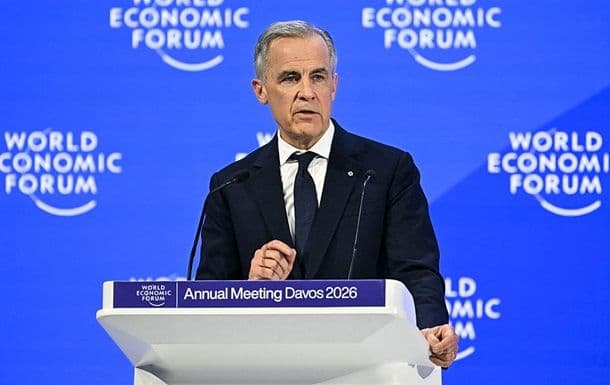
For several decades now, one of the most important events in January has traditionally been the World Economic Forum (WEF) in Davos. According to the Global Risks Report published by the WEF prior to this year's event, the world faces serious turmoil in the next two years, with geo-economic confrontation – trade wars, sanctions and mutual economic pressure between countries – topping the list of threats.
From the end of World War II to President Trump's first term (January 2017 – January 2021), the global economy became increasingly integrated – a process referred to as ‘globalisation’. Thanks to simplified logistics, reduced trade barriers, the development of technology exchange, foreign investment, and the active development of the international division of labour, this integration contributed to increased economic productivity and living standards in most countries and for billions of people.
The recent events – the trade war between the US and China, the sharp increase in trade restrictions around the world, restrictions due to the coronavirus pandemic, economic sanctions against Russia after the start of the war in Ukraine, and the change in the US position on many issues with Trump's return to power – have reversed this process. It seems that the global economy is fragmenting into trade blocs based on foreign policy considerations.
As a hypothesis, we can assume that the future of world trade may follow one of two paths: further fragmentation or diversification of trade relations. The current development of geopolitical and civilisational confrontation points to a high probability of fragmentation. In this context, two scenarios are possible.
For a more convenient explanation, let us divide the world into three hypothetical blocs: Western (‘USA+’ – let us not go to extremes and assume that there will be no major rift among the ‘cultural West’), Eastern (‘China+’), and neutral. A possible approximate, non-rigid criterion for division would be the vote on the UN resolution in March 2002, ‘Aggression against Ukraine.’
The first scenario is a sharp tightening of trade conditions between the Eastern and Western blocs, but maintaining trade conditions between the neutral bloc and the other two.
The second scenario involves not only restrictions on trade policy in the countries of the Eastern and Western blocs, but also the abolition of trade agreements between them and the simultaneous withdrawal of the Eastern Bloc countries from the WTO.
In the first scenario, there would be a noticeable reduction in trade between the Western and Eastern blocs. The neutral bloc could benefit from some growth in its exports to the Eastern Bloc countries. However, the gains could be offset by a reduction in imports from the Western and Eastern blocs due to a decline in production in these two blocs (due to their trade confrontation with each other).
In the second scenario, the withdrawal of the Eastern Bloc from the WTO leads to a significant reduction in trade between the Eastern and Neutral Blocs and to a very sharp reduction between the Western and Eastern Blocs. The countries of the Neutral Bloc will also suffer, losing the benefits of trade under WTO agreements with the countries of the Eastern Bloc. Trade between the neutral and Western blocs and bilateral trade between countries within the Western and Eastern blocs may increase slightly.
The losses of individual countries in all three blocs will vary significantly. The most open economies and states that have established strong trade links with states in the bloc that will become their adversary will suffer the most from trade fragmentation. For example, South Korea, Chile and Peru, which are part of the conditional ‘Western bloc’ and actively trade with China (Eastern bloc), will suffer significant economic losses. Hong Kong is in a similar situation: it represents the Eastern bloc, but actively trades with the West.
Politically and security-motivated principles based on geopolitical proximity are coming to the fore in world trade. The world is entering a phase where trade liberalisation will take place not through universal agreements, but through regional and bilateral agreements. Global trade is likely to grow within the Western and Eastern blocs.
On a global scale, this could lead to a decline in world trade and a slowdown in global economic growth. Due to the geopolitical fragmentation of the global economy, the importance of ‘neutral countries’ will grow – they will become a bridge through which countries from competing blocs will be able to gain indirect access to each other's markets (there is no doubt that there will be a desire to do so).
According to IMF estimates, the collapse of the global economy into competing economic blocs could cost up to 7% of global GDP. Based on the fact that global GDP is estimated at $117 trillion in 2025, this represents a loss of $8.2 trillion, which is the combined GDP of Japan and the United Kingdom – the fourth and sixth largest economies in the world by GDP. This would mean a sharp reversal of the achievements of recent decades, when integration and cooperation have contributed to poverty reduction, cheaper goods and the creation of hundreds of millions of jobs.
If globalisation is viewed solely as a threat to national interests, countries will continue to ‘build walls’. If it is seen as a platform for mutual benefits, innovation and division of labour, the focus will shift to making it fairer, more sustainable and more inclusive.
The choice is between a future in which the world is fragmented, with higher costs and increased risks of additional wars to those already underway, and a future in which the world is once again committed to integration, learning from its past mistakes rather than rejecting the idea altogether.
However, it is likely that foreign policy will determine the future of the global economy. This points to a high probability of fragmentation along geopolitical lines and security objectives. Therefore, there is little optimism about the qualitative development and quantitative growth of the global economy and trade, as well as the improvement of the living standards of the global population.
Vyacheslav Butko,
Economic Advisor to the Kyiv Security Forum

 Ukraine, Kyiv, 01001