





Kyiv Security Forum Analytics
Ukraine has become one of the main targets of the Fidesz party’s election campaign. In this regard, we find ourselves in ‘good company’ – alongside the leadership of the European Union. Hungarian Prime Minister Viktor Orbán regularly attacks European Commission President Ursula von der Leyen, accusing Brussels of supporting Ukraine.
Fidesz’s anti-Ukrainian rhetoric goes hand in hand with its anti-European campaign. And this is happening in a country that has received billions of euros in financial support from the EU for decades.
The ruling party is trying to convince Hungarian society that the source of the country’s economic problems is Ukraine. Not the miscalculations of government economic policy, not the consequences of Russian aggression, not global energy shocks — but Ukraine itself.
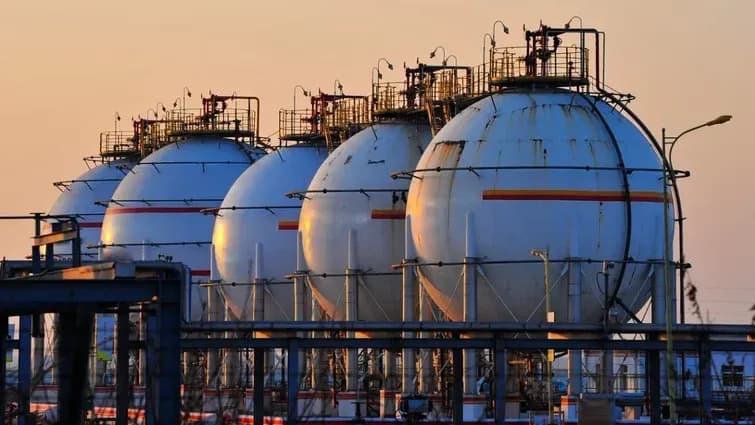
The rise in energy prices in Budapest is attributed to the suspension of the Druzhba oil pipeline, damaged by a Russian strike. However, the blame is shifted onto Kyiv — allegedly, Ukraine is not clearing up the aftermath of the attack quickly enough or is exaggerating its scale. To ‘confirm’ this version, a group of Hungarian ‘experts’ is being sent to Ukraine in a show of force — without consultation with Kyiv and with maximum media coverage. It is clear that this is not about expertise, but a propaganda stunt.
At the same time, Orbán has not voiced a single word of criticism towards Russia. Some observers even suggest that the attack on the oil pipeline could have been part of a broader Russian-Hungarian information operation aimed at discrediting Ukraine.
In this same context, one should also consider the detention in Hungary of two Oschadbank cash-in-transit vehicles carrying cash sent by the Austrian Raiffeisen Bank in accordance with the current agreement. The money will obviously be returned — but quietly and only after the elections. For now, however, this act, which has rightly been called ‘state banditry’ in Kyiv, is being used to create an image of alleged Ukrainian corruption. At the same time, Budapest’s propaganda reports prefer not to mention the fact that an Austrian bank was involved in the deal.
Blocking negotiations on Ukraine’s accession to the EU is another central element of Orbán’s policy. His arguments boil down to a simple slogan: Ukraine’s membership allegedly harms Hungary’s interests. Budapest ignores rational explanations that it is precisely the negotiations that should determine the terms of accession — after all, it is blocking them itself. In this logic, it is not Hungarian but Russian interests that are becoming increasingly apparent. Orbán’s recent statement about his desire to see Ukraine as a ‘buffer’ between Hungary and Russia is also telling.
Russian influence is also evident in Budapest’s energy policy. Orbán is proposing to lift part of the EU’s energy sanctions against Moscow, is blocking the 20th package of sanctions, and is also blocking a €90 billion loan to Ukraine — despite the fact that Hungary had already agreed to this mechanism last year following a compromise with its partners. Now Budapest is effectively reneging on its own commitments — behaviour that Brussels considers unacceptable. But for the election campaign, it seems, any means are fair game.
The European Commission is responding cautiously, trying to avoid accusations of interfering in the elections. Nevertheless, such accusations are still being levelled — without any basis. Fidesz needs them to mobilise the electorate against its main opponent — Péter Magyar, leader of the Tisa party, whom government propaganda portrays as a ‘puppet of Brussels’.
Despite this, the European Union is hoping for political change. Opinion polls provide grounds for such expectations. In early March, a survey by the 21 Research Centre, commissioned by the publication 24.hu, showed that among decided voters, 53% support Péter Magyar and 39% support Viktor Orbán.
However, regardless of the election results, the future of Ukrainian-Hungarian relations will require serious work. The Orbán government’s long-standing anti-Ukrainian campaign has significantly distorted the atmosphere between our nations. According to the Pew Research Center (July 2025), Hungarians perceive Ukraine as one of the main threats — 27%, second only to Russia (33%).
This is one of the most alarming consequences of Budapest’s current policy.



 Ukraine, Kyiv, 01001