


Kyiv Security Forum Analytics
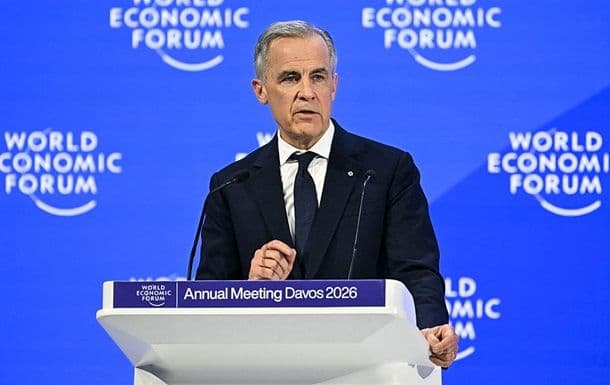
US President Donald Trump's speech at the World Economic Forum in Davos highlighted the depth of the crisis that the modern world may find itself in.
The world order based on respect for the territorial integrity of states, support for democracy, human rights and basic moral principles may become a thing of the past. The ‘rule of law’ may be replaced by the ‘law of force.’ This may happen if one of the potential key geopolitical players – Europe – does not move into the ranks of active players and begin to build its policy based not on the ‘power of values’ but on the ‘value of power.’
Fortunately, Greenland did not trigger the final collapse of the Euro-Atlantic partnership. NATO Secretary General Mark Rutte once again demonstrated his crisis management skills. Other actors, including those in the United States itself, also contributed to the constructive outcome.
There is now a chance that this time the problem can be resolved without escalation. President Trump responded sympathetically to proposals for resolving the issue of Greenland's security put forward by the Europeans and the Alliance. According to media reports, these include the possibility of expanding the American military presence in Greenland, with the transfer of limited territories under military bases to US ownership; the right of Americans to invest in the extraction of the island's natural resources; and the expansion of cooperation within NATO on Arctic security issues.
The ‘purchase’ of Greenland is currently off the agenda, as is Washington's raising of tariffs for Europeans.
The situation in Ukraine is once again at the top of the European agenda, as confirmed by the informal EU summit on 23 January.
However, neither the latest discussion within the EU on support for Ukraine, nor the latest ‘positive’ meeting between Ukrainian President Volodymyr Zelenskyy and his American counterpart Trump, nor the latest visit by his representatives Vitkoff and Kushner to Moscow have brought us closer to peace.
The reason is the same one that has been mentioned many times before: the lack of adequate pressure on the Kremlin from both the US and Europe.
The solutions are also well known and entirely feasible if there is sufficient political will: supplying Ukraine with long-range weapons to systematically destroy Russia's military potential, as well as significantly strengthening sanctions and measures to enforce them, in particular by blocking Russia's shadow fleet. Regarding the latter, the US has provided excellent examples of how this can be done. But they need to be significantly scaled up, including near Europe, to become an effective tool.
Unfortunately, instead of this, our partners are ready to significantly lower their ambitions in communicating with the Russian side in the near future. Today, on January 23, trilateral consultations between the negotiating teams of Ukraine, the US and Russia begin in the United Arab Emirates. And the decisions, if any, may not concern a ceasefire, but an ‘energy truce.’
Recently, this issue was highlighted in the media as the main topic for consultations in Abu Dhabi. However, doubts were expressed that Moscow would agree to this. The expediency of such a partial decision for Ukraine was also not considered indisputable, as it would mean the impossibility of further strikes on the Russian Federation's energy sector. And now this is one of the main levers of pressure on Moscow.
Following President Zelenskyy's latest statements, the main focus is now on discussing territorial issues. However, after Putin's refusal yesterday to compromise with American representatives on Donbas, it is not entirely clear what can be discussed on this topic at the working level. Therefore, concrete decisions on territorial issues are unlikely.
In other words, we are back where we were almost a year ago. During this time, it has not been possible to achieve even limited but stable results from the Russian Federation. Washington's significant shift in position towards Moscow has not helped either.
Today, it is possible that some decisions may be taken. However, this will not be due to a hardening of the position of Western partners on Russian aggression, but thanks to Ukraine's intensified actions against Russian energy.
Fundamental changes in achieving peace are possible, but only if Ukraine and the West join forces in good faith.



 Ukraine, Kyiv, 01001