





Kyiv Security Forum Analytics
The month-long ceasefire in Iran has once again been called into question. US President Donald Trump has described Tehran’s response to American peace initiatives as completely unacceptable.
Washington’s latest proposal called for an end to the war, the opening of the Strait of Hormuz and the rollback of Iran’s nuclear programme. However, the Iranians perceived this as a demand for surrender.
The Iranian news agency Tasnim reported that Tehran’s proposal, sent via the intermediary Pakistan, includes an immediate cessation of hostilities on all fronts, including the Lebanese one, an end to the US blockade of Iranian ports, and guarantees against further attacks on Iran. Furthermore, according to Iranian state television, Tehran continues to insist on military reparations from the US, full sovereignty over the Strait of Hormuz, and the lifting of sanctions and the unblocking of Iranian assets.
The sharp change in the tone of Trump’s public statements regarding the prospects for peace talks in the Middle East has led to another surge in oil prices – by $4 per barrel.
What Washington’s next steps will be remains unclear for now. However, following Trump’s recent announcement of the official end to military operations in Iran, it is difficult to predict a large-scale resumption of hostilities in the region. It is unlikely that the US Congress would view this as the start of a new military operation, which is not subject to legislative restrictions on its duration without the consent of lawmakers. Oil prices, as well as their potential impact on the results of the November mid-term elections to the US Congress, do not favour a military course of action.
Another factor is the view of Israel, which the US President has effectively sidelined from decision-making on Iran. According to Prime Minister Benjamin Netanyahu in an interview with CBS News, “much has been achieved, but this is not the end… There are still enrichment facilities that need to be eliminated. There are still ‘proxies’ supported by Iran. There are ballistic missiles that they still want to produce.”
Tel Aviv’s position, as well as its role in the escalation of the war in Iran, has proved not so straightforward for the American public. The unpopularity of the war in Iran, which is opposed by around 60% of Americans, and accusations that Trump launched military action under Netanyahu’s influence, have led to a decline in support for Israel in the US. According to a Pew Research Center poll conducted on 23–29 March, 60% of the American public view Israel negatively, and 59% have little or no trust in Netanyahu. Moreover, in both political parties, more than 50% of respondents view Israel and Netanyahu negatively.
Anticipating this, Netanyahu stated in an interview with CBS that he wants to “reduce to zero” US financial support for the Israeli armed forces over the next decade. Under US law, this amounts to around $3.8 billion a year.
Trump now finds himself in a ‘stalemate’ regarding Iran. He cannot sign a deal with Iran that is worse than that of his Democratic predecessor, Obama, whom he criticised so heavily for it. At the same time, Tehran is not offering a better one. He cannot resume military action without legal consequences and reputational damage. And continuing the blockade of Iranian ports, which is currently the only lever of pressure on Iran, cannot be sustained indefinitely due to oil prices and their impact on the November elections. Military support for Israel in an operation against Iran has long since turned from an advantage into a domestic political problem.
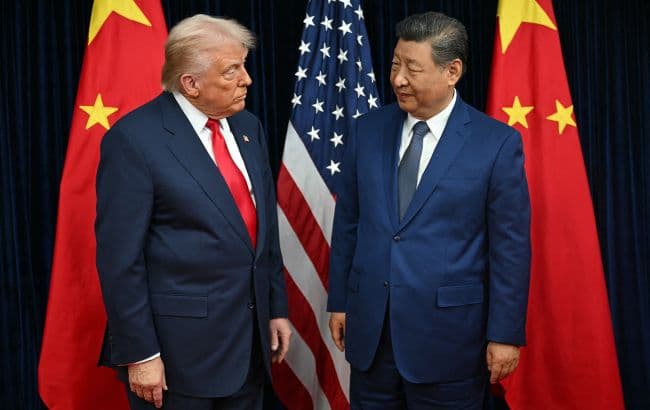
A rare international consensus has emerged on the issue of Iran. Almost all interested parties, including Europe, China and the Arab states, are opposed to war. Nor do they support Tehran’s nuclear ambitions. However, they do not wish to assist Washington with military action, believing that Trump himself must resolve the problem he created, preferably through peaceful means. Moreover, some, such as Chinese leader Xi Jinping, seek to exploit the complexity of the US position for their own interests.
The next test of Trump’s negotiating skills in foreign policy will take place very soon – on 13 May during his visit to Beijing.


 Ukraine, Kyiv, 01001