


Kyiv Security Forum Analytics
Recently, a controversial post on X by Polish Prime Minister Donald Tusk caused a stir in the Ukrainian and international media. He stated that Poland’s withdrawal from the European Union was no longer ‘hypothetical’. In his view, this is the aim of the parliamentary groups ‘Confederation Liberty and Independence’ (‘Konfederacja Wolność i Niepodległość’) and ‘Confederation of the Polish Crown’ (‘Konfederacja Korony Polskiej), as well as a significant proportion of politicians from the former ruling party ‘Law and Justice’ (‘Prawo i Sprawiedliwość’, PiS).
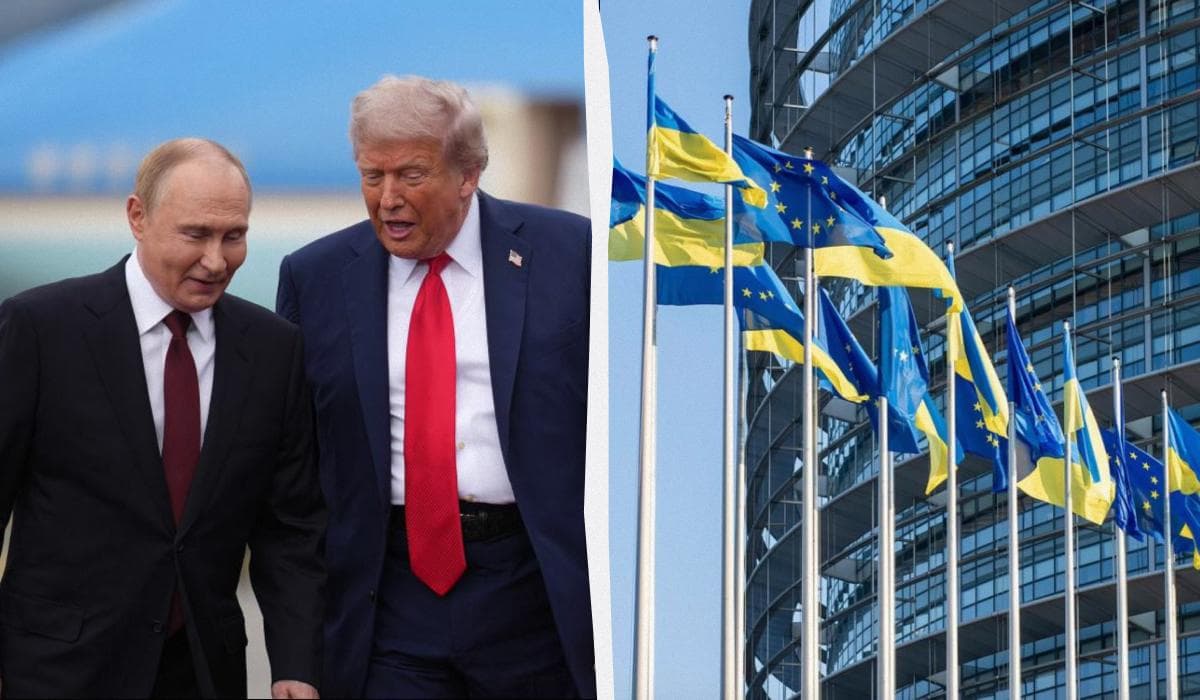
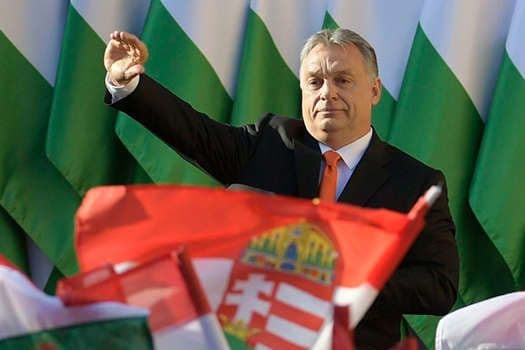
Tusk included Russia, the American MAGA movement and European far-right radicals – symbolically represented by Hungarian Prime Minister Viktor Orbán – among the external actors who, in his view, are spreading Eurosceptic narratives.
However, the trigger for such strong warnings was not the radicals’ statements, but President Karol Nawrocki’s veto of a law on obtaining a preferential loan of €43.7 billion under the EU’s Security Action for Europe (SAFE) defence programme.
These funds were to be used to modernise the Polish armed forces, in particular as part of Poland’s record defence budget for 2026 – 200 billion Polish złoty, which amounts to around 4.8% of the country’s GDP. Navrocki explained his decision by stating that borrowing through foreign banks is disadvantageous for Poland and that these needs should be met using domestic resources.
Prime Minister Tusk considers this approach unrealistic. At the same time, the governing coalition does not have enough votes to override the presidential veto. Consequently, it remains unclear how the financial dilemma surrounding defence spending will be resolved.
As for relations with Hungarian Prime Minister Orbán, who may lose power following the parliamentary elections, the Polish government likely has no grounds for excessive concern. However, accusations aimed at the MAGA movement – a political force linked to US President Donald Trump – may have certain consequences. Poland has traditionally relied on the United States for security matters – both regarding the American military presence and large-scale arms purchases.
Anti-European sentiments do indeed exist in Poland, and they cannot be dismissed as marginal. According to various estimates, between 10 and 25 per cent of citizens may support the idea of leaving the EU. At the same time, this level of support does not yet appear critical. All the more so as Poland remains one of the biggest beneficiaries of European integration. Over twenty years of membership, it has received over €245 billion from the EU budget, whilst its contribution amounted to approximately €84 billion.
However, Donald Tusk’s signals should not be ignored. The experience of the UK’s exit from the EU shows that an aggressive information – or rather disinformation – campaign, amplified by external actors, is sometimes capable of outweighing even the most convincing pragmatic arguments. We must also be prepared for the fact that in this existentially important debate, both sides may use not only bare facts to bolster their position, but also exaggerated concerns and warnings, or even blatant emotional scaremongering.





 Ukraine, Kyiv, 01001