




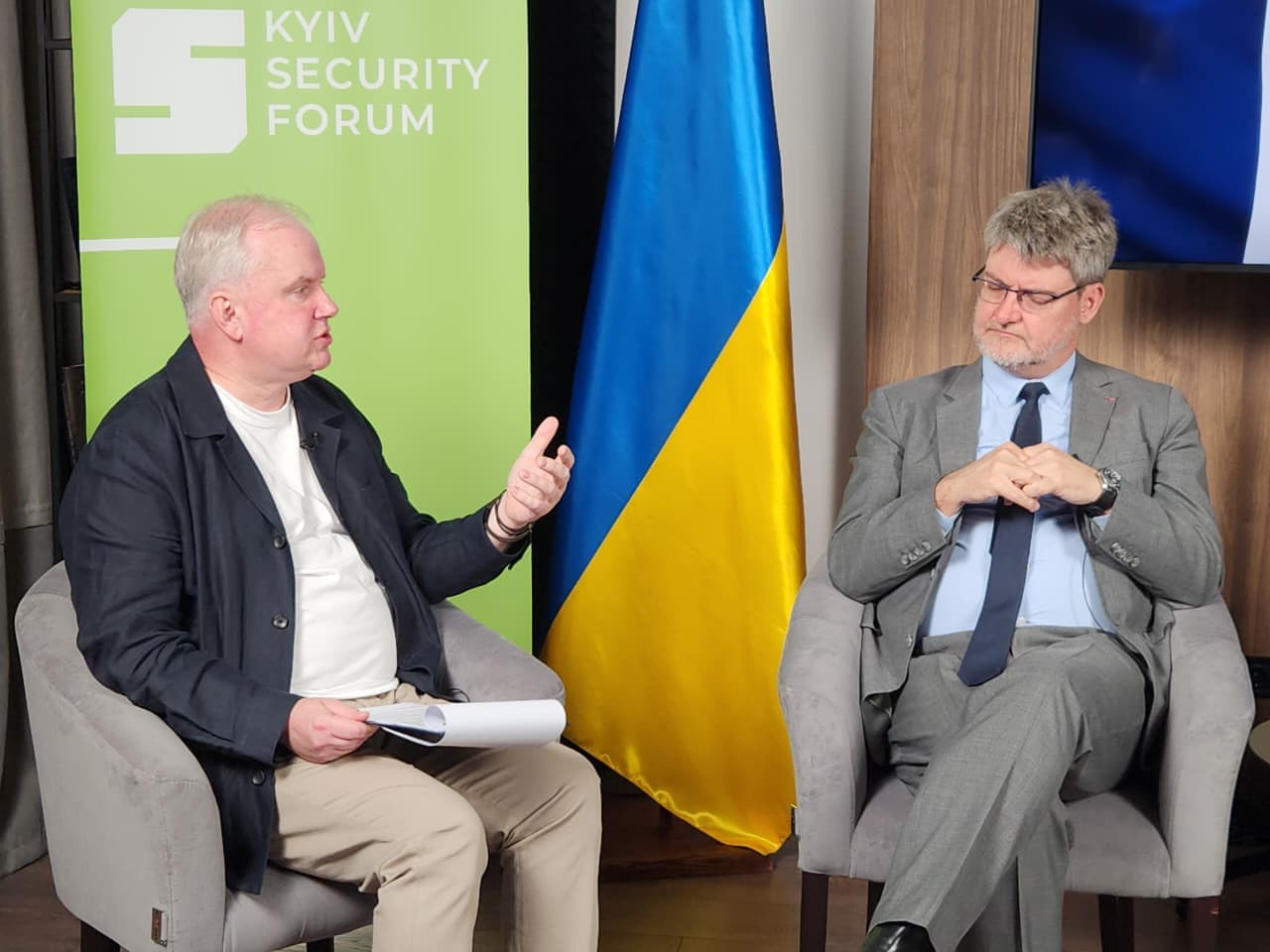
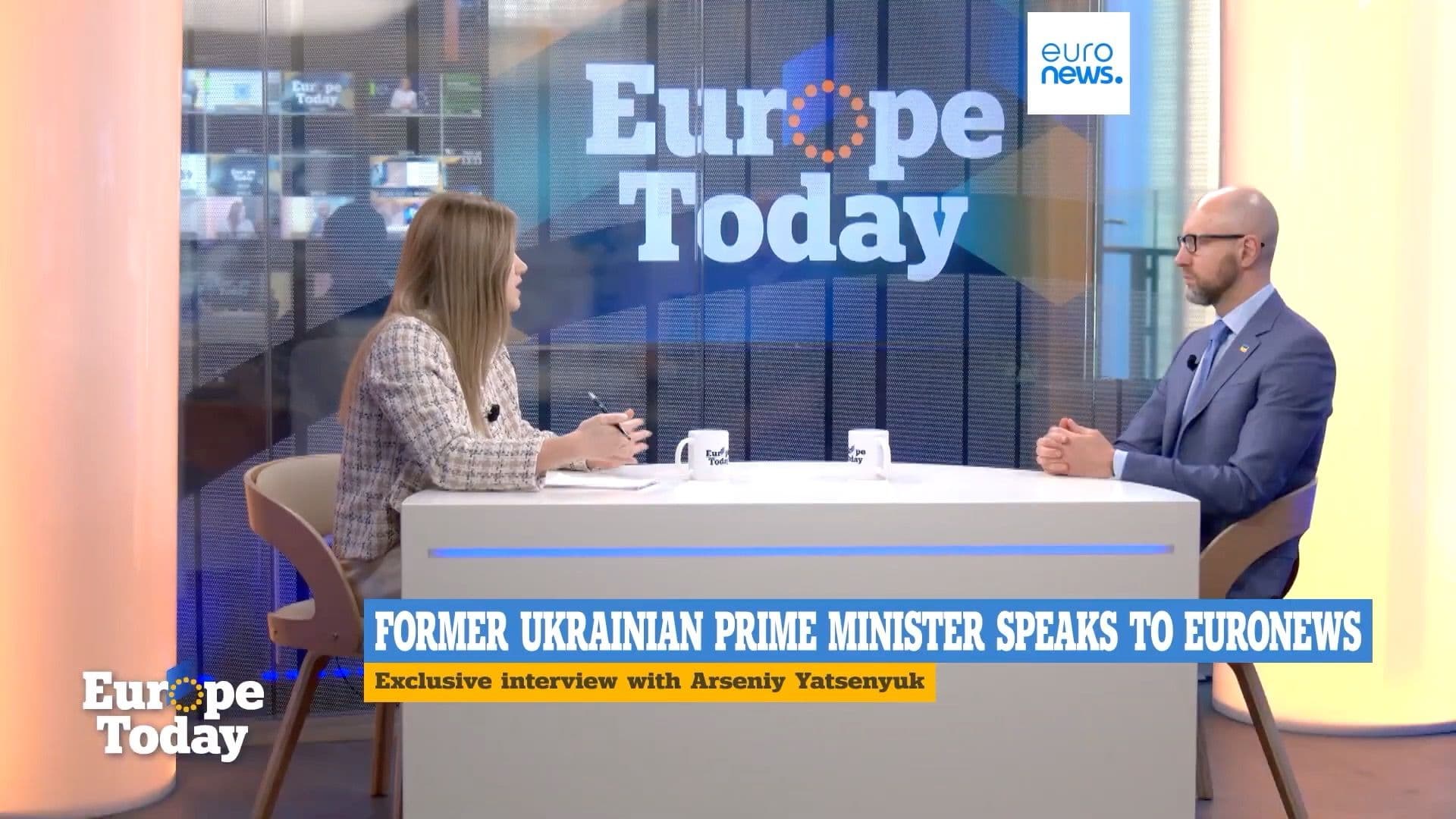
Arseniy Yatsenyuk, Chairman of the Kyiv Security Forum and Prime Minister of Ukraine from 2014 to 2016, recently took part in the second meeting of the High-Level Advisory Group, initiated by European Commissioner for Defence and Space Andrius Kubilius. The meeting took place in Brussels and was dedicated to discussing the future of European defence.
The group was established at the end of last year on a voluntary basis. It comprises former heads of state, government and European institutions who discuss current issues relating to European security and defence.
In addition to Arseniy Yatsenyuk, the group includes Herman Van Rompuy – President of the European Council from 2009 to 2014; José Manuel Barroso, President of the European Commission from 2004 to 2014; Carl Bildt, Prime Minister of Sweden from 1991 to 1994 and Minister for Foreign Affairs from 2006 to 2014; Enrico Letta – Prime Minister of Italy from 2013 to 2014, President of the Jacques Delors Institute and author of the EU Report on the Future of the Single Market; Mikuláš Dzurinda – Prime Minister of Slovakia from 1998 to 2006, President of the Wilfried Martens Centre for European Studies; Hans-Gert Pöttering – President of the European Parliament from 2007 to 2009; Natalia Gavrilița – Prime Minister of Moldova from 2021 to 2023, as well as other prominent European politicians and statesmen.
Issues of direct relevance to Ukraine’s future were brought up for discussion: the creation of a European Defence Union, as well as the prospects for Ukraine and Moldova’s accession to the European Union.
Arseniy Yatsenyuk emphasized that the security of Europe and the security of Ukraine are inseparable. Ukraine has already become one of the key elements of European security thanks to its combat experience, defence technologies, military-industrial complex, and the people who defend our shared values of freedom every day. That is precisely why the European Defence Union can only become a truly effective force with Ukraine’s participation. This is also a further compelling argument in favour of its membership of the European Union.
The reasoning behind this framework is based on Article 42.7 of the Treaty on European Union, which provides for mutual assistance among Member States in the event of armed aggression. At the same time, the European Defence Union is not viewed as an alternative to NATO or Ukraine’s membership of the Alliance. This is an additional practical mechanism for strengthening Europe’s defence capabilities and fully involving Ukraine in shaping the continent’s new security architecture.
Regarding Ukraine’s European integration path, Arseniy Yatsenyuk’s position remains unequivocal: the ultimate goal is full membership of the European Union. Ukraine expects the first negotiation cluster to open as early as June. At the same time, alongside the proposals by German Federal Chancellor Friedrich Merz regarding the expansion of Ukraine’s forms of participation in the EU’s work, it is necessary to work actively to ensure the maximum possible level of Ukraine’s influence on the European decision-making process even before full membership is achieved.
“We must enter the room where decisions are made while the political landscape of the European Union allows it,” emphasised the Chairman of the Kyiv Security Forum.
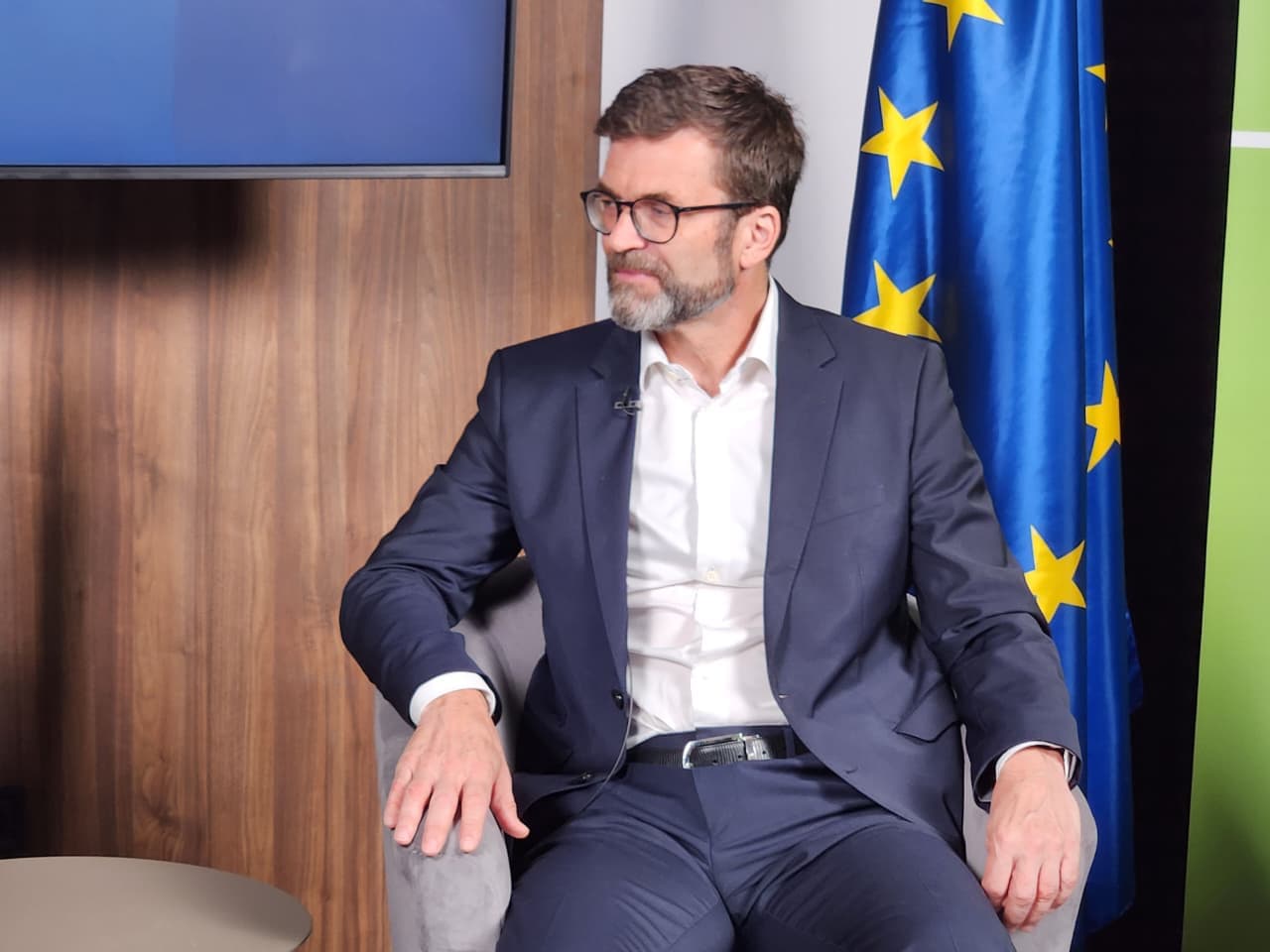
Arseniy Yatsenyuk’s position was well received both by European Commissioner Andrius Kubilius himself – one of the main advocates of the creation of a European Defence Union involving Ukraine and its accession to the EU – and by other participants in the discussion.
In an interview with the Financial Times, he called on the governments of European states to urgently provide Ukraine with all necessary weaponry from existing arsenals, whilst simultaneously expanding the production capacity of the defence industry. In his view, €60 billion from the recently approved credit facility intended for Ukraine's defence needs could be used for such procurements. In the future, these funds could help replenish the stocks of EU member states and expand arms production.
At the same time, Kubilius emphasised the need to review the European model of defence production. He called for a move away from an approach he described as ‘high fashion’ – one that is overly complex, expensive and cannot be scaled up quickly. Instead, Europe should draw on Ukraine’s experience in creating effective, relatively inexpensive systems that can be produced rapidly in large quantities.
According to the European Commissioner, strengthening Ukraine’s defence capabilities is particularly important right now, at a time when calls for the resumption of negotiations with Russia are growing ever louder. Kubilius stressed that the only formula capable of bringing about a just and lasting peace is peace through strength. And that strength must be on Ukraine’s side, and Europe is capable of helping to ensure it.
 Ukraine, Kyiv, 01001